










Description
CÔNG NGHỆ KHỬ TRÙNG CLO DIOXIT (CLO2)

Nhà sản xuất: GAFFEY - UK
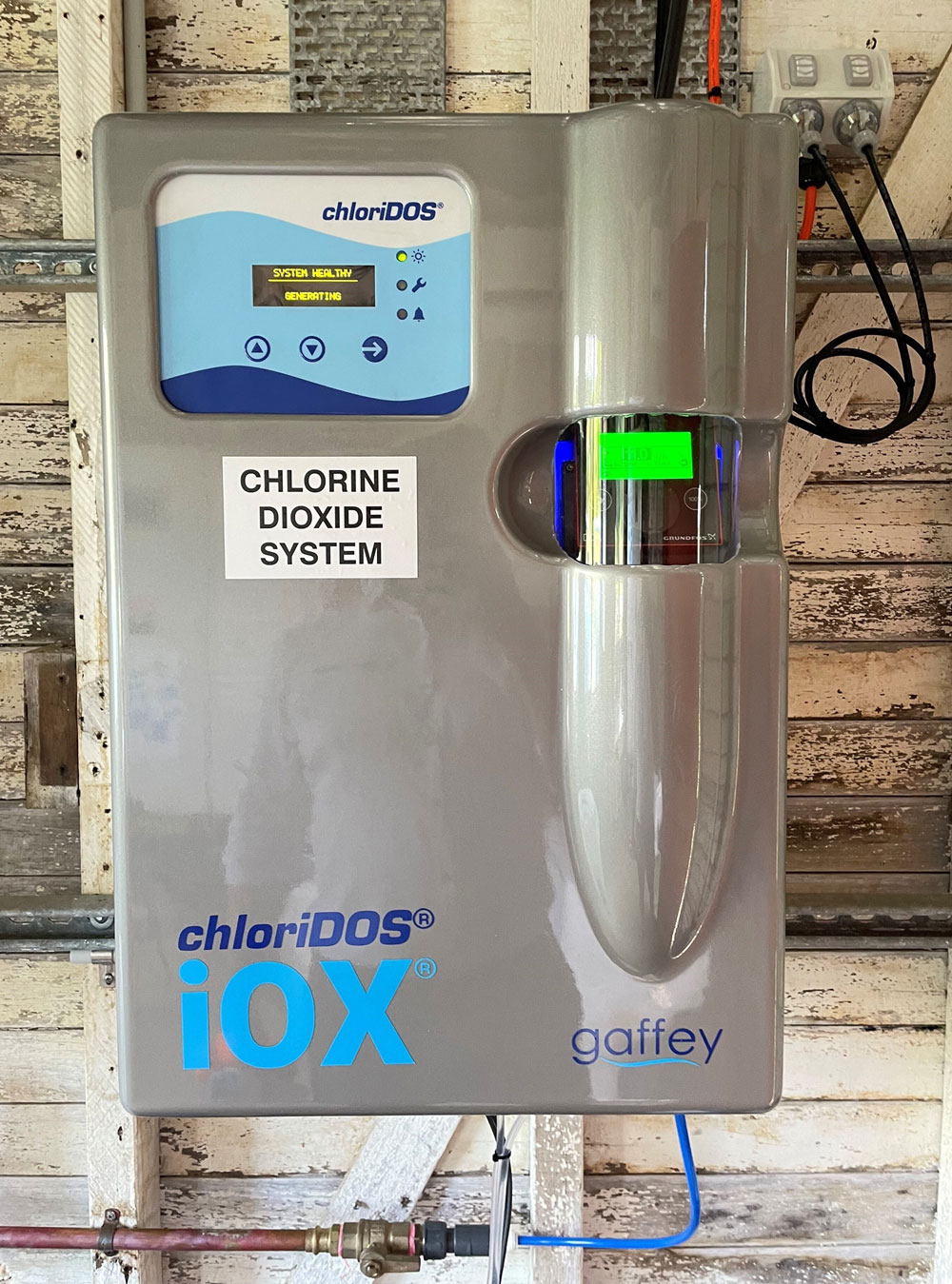
Model: chloriDOS® iOX® (i O X ®- 1, i O X ®- 2)
Brochure Công Nghệ Tạo Clo Khử Trùng Nước GAFFEY
Brochure Công Nghệ Khử Trùng Clo Dioxit chloriDOS® iOX®
Công ty Môi Trường Hành Trình Xanh hân hạnh là nhà phân phối chính thức sản phẩm Công Nghệ Khử Trùng Clo Dioxit (CLO2) tại thị trường Việt Nam. Chúng tôi cam kết cung cấp sản phẩm và dịch vụ tốt nhất tới Quý Khách hàng.

1. Chlorine Gas: Risks and Alternatives for Water Treatment Plant Operators / Khí clo: Rủi ro và giải pháp thay thế cho người vận hành nhà máy xử lý nước
Water treatment plant operators have long relied on chlorine gas systems to disinfect water. / Các kỹ sư vận hành nhà máy xử lý nước từ lâu đã dựa vào hệ thống khử trùng bằng khí clo để tiệt trùng nước.
Chlorine gas is an effective method for destroying harmful bacteria and viruses in water. Still, it can also pose a significant risk to the health and safety of workers and the general public. / Khí CLO là một phương pháp hiệu quả trong việc tiêu diệt các loại vi khuẩn và virus gây hại trong nước, tuy nhiên, nó cũng tiềm ẩn nguy cơ đáng kể đối với sức khỏe và an toàn của người lao động cũng như cộng đồng xung quanh.
Chlorine gas use for water treatment is still standard in many parts of the world. While chlorine gas is an effective disinfectant, it poses significant risks to human health and the environment. Accidental releases of chlorine gas can cause severe respiratory problems and other health issues, as well as environmental damage. / Việc sử dụng khí clo trong xử lý nước vẫn còn phổ biến ở nhiều nơi trên thế giới. Mặc dù đây là một chất khử trùng mạnh, nhưng khí clo cũng mang lại rủi ro nghiêm trọng cho sức khỏe con người và môi trường. Các sự cố rò rỉ khí clo có thể gây ra các vấn đề nghiêm trọng về hô hấp và nhiều ảnh hưởng sức khỏe khác, đồng thời gây thiệt hại cho môi trường.

The June 2022 incident at the Jordan port of Aqaba is a tragic reminder of the dangers associated with chlorine gas. The accident, which killed at least 13 people and injured 250, was caused by a toxic yellow chlorine gas leak that sent plumes of smoke into the air. The incident not only posed a significant health risk to the people of Aqaba but also to the neighbouring Israeli city of Eilat. / Sự cố xảy ra vào tháng 6 năm 2022 tại cảng Aqaba (Jordan) là lời nhắc nhở đau lòng về những nguy hiểm liên quan đến khí CLO. Vụ tai nạn, khiến ít nhất 13 người thiệt mạng và 250 người bị thương, được xác định là do rò rỉ khí clo độc hại màu vàng, tạo ra cột khói độc bốc cao trên không trung. Sự cố này không chỉ đe dọa nghiêm trọng đến sức khỏe người dân tại Aqaba, mà còn ảnh hưởng tới thành phố Eilat lân cận của Israel.

1.1. Viable Alternative – Chlorine Dioxide / Giải pháp thay thế khả thi – Chlorine Dioxide (Clo Dioxit / CLO2)
In light of this incident, it is essential that water treatment plant operators seriously consider alternatives to chlorine gas. Chlorine dioxide, for example, is a safer and more effective alternative to chlorine gas. It is highly effective at destroying harmful bacteria and viruses in water, and it does not produce the harmful byproducts that chlorine gas can create. / Trước bối cảnh của sự cố vừa qua, các nhà vận hành nhà máy xử lý nước cần nghiêm túc xem xét các giải pháp thay thế cho khí clo. Chlorine Dioxide (Clo Dioxit) là một lựa chọn an toàn và hiệu quả hơn, có khả năng tiêu diệt mạnh mẽ vi khuẩn và virus gây hại trong nước, đồng thời không tạo ra các sản phẩm phụ độc hại như khí clo.
Chlorine dioxide is more stable than chlorine gas, which can reduce the risk of accidental releases and prolong the life of water treatment equipment. / Chlorine Dioxide ổn định hơn khí clo, giúp giảm nguy cơ rò rỉ ngẫu nhiên và kéo dài tuổi thọ thiết bị xử lý nước.
1.2. Protecting the Future / Bảo vệ tương lai
Water treatment plant operators have a responsibility to provide safe and clean drinking water to their communities while also protecting the health and safety of their workers and the public. Switching to safer alternatives to chlorine gas, such as chlorine dioxide, is an essential step in achieving this goal. By doing so, incidents like the one in Jordan can be prevented, and the health and well-being of communities can be protected. / Các kỹ sư vận hành nhà máy xử lý nước có trách nhiệm cung cấp nguồn nước uống an toàn và sạch cho cộng đồng, đồng thời đảm bảo sức khỏe và an toàn cho người lao động và công chúng. Chuyển đổi sang các giải pháp an toàn hơn, chẳng hạn như Chlorine Dioxide, là một bước đi cần thiết để đạt được mục tiêu đó. Bằng cách này, những sự cố như ở Jordan có thể được ngăn ngừa, góp phần bảo vệ sức khỏe và phúc lợi của cộng đồng.
As a result of these risks, many water treatment plant operators are seeking safer alternatives to chlorine gas, such as chlorine dioxide, a powerful disinfectant safer to handle and use than chlorine gas. / Do những rủi ro tiềm ẩn của khí clo, ngày càng nhiều nhà máy xử lý nước đang tìm kiếm các giải pháp thay thế an toàn hơn, như Chlorine Dioxide — một chất khử trùng mạnh, dễ sử dụng và an toàn hơn nhiều so với khí clo.
Chlorine dioxide is a highly effective disinfectant that can kill a broad range of waterborne pathogens, including bacteria, viruses, and protozoa. It is also less corrosive than chlorine gas, which can help to prolong the life of water treatment equipment. / Chlorine Dioxide là một chất khử trùng hiệu quả cao, có khả năng tiêu diệt nhiều loại mầm bệnh trong nước, bao gồm vi khuẩn, virus và ký sinh trùng. Ngoài ra, ClO₂ ít gây ăn mòn hơn khí clo, giúp kéo dài tuổi thọ thiết bị xử lý nước.
1.3. Additional Advantages / Các lợi thế bổ sung
Chlorine Dioxide Advantages Over Chlorine. In addition to being safer and more effective than chlorine gas, chlorine dioxide has other advantages as well. For example, it does not leave behind the harmful byproducts that chlorine gas can produce, such as trihalomethanes and haloacetic acids. / Ưu điểm của Chlorine Dioxide so với Chlorine. Bên cạnh việc an toàn và hiệu quả hơn khí clo, Chlorine Dioxide (Clo Dioxit) còn mang lại nhiều ưu điểm vượt trội khác. Ví dụ, ClO₂ không tạo ra các sản phẩm phụ độc hại mà khí clo có thể sinh ra, chẳng hạn như trihalomethanes (THMs) và haloacetic acids (HAAs) – những hợp chất có thể ảnh hưởng xấu đến sức khỏe con người.
Another advantage of chlorine dioxide is that it is more stable than chlorine gas. Chlorine dioxide can be stored for extended periods without the risk of degradation, which can reduce the frequency of chemical deliveries and reduce the cost of water treatment. / Một ưu điểm khác của Chlorine Dioxide là tính ổn định cao hơn khí clo. ClO₂ có thể được lưu trữ trong thời gian dài mà không bị phân hủy, giúp giảm tần suất cung cấp hóa chất và giảm chi phí xử lý nước tổng thể.
Water treatment plant operators should consider switching from chlorine gas to chlorine dioxide-based systems. Chlorine dioxide offers several advantages over chlorine gas, including increased safety, improved disinfection capabilities, and reduced costs. / Các nhà vận hành nhà máy xử lý nước nên xem xét chuyển đổi từ hệ thống sử dụng khí clo sang công nghệ dựa trên Chlorine Dioxide, vì ClO₂ mang lại nhiều lợi ích vượt trội, bao gồm: Độ an toàn cao hơn, Hiệu quả khử trùng mạnh mẽ hơn, Và chi phí vận hành thấp hơn, giúp đảm bảo nguồn nước sạch và an toàn hơn cho cộng đồng.
2. Chlorine Dioxide Advantages Over Chlorine / Ưu điểm của Chlorine Dioxide so với Chlorine
More effective, less cost and kind to the environment / Hiệu quả hơn – tiết kiệm hơn – thân thiện hơn với môi trường
For many years, Chlorine has been the most commonly used chemical for water treatment due to its ability to effectively kill bacteria and viruses. / Trong nhiều năm, chlorine (clo) đã là hóa chất được sử dụng phổ biến nhất trong xử lý nước nhờ khả năng tiêu diệt hiệu quả vi khuẩn và virus.
However, ClO2 (Chlorine dioxide) has emerged as a popular alternative in recent years due to its unique and superior properties. / Tuy nhiên, Chlorine Dioxide (ClO₂) trong những năm gần đây đã trở thành một lựa chọn thay thế ưu việt nhờ các tính chất vượt trội và độc đáo của nó.
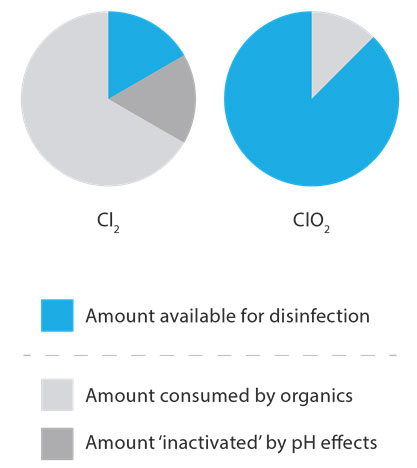
Chlorine dioxide is a powerful and efficient oxidising agent that can effectively eliminate waterborne pathogens, including viruses, bacteria, and parasites, without producing harmful by-products such as trihalomethanes (THMs) and haloacetic acids (HAAs). / Chlorine Dioxide là tác nhân oxy hóa mạnh mẽ và hiệu quả, có khả năng loại bỏ các mầm bệnh trong nước — bao gồm virus, vi khuẩn và ký sinh trùng — mà không tạo ra các sản phẩm phụ độc hại như Trihalomethanes (THMs) hay Haloacetic Acids (HAAs).
Our team has conducted extensive research and compiled a list of some of the significant benefits of ClO2, which make it a better option for water treatment needs. / Đội ngũ của chúng tôi đã tiến hành nghiên cứu chuyên sâu và tổng hợp các lợi ích nổi bật của ClO₂, chứng minh rằng đây là giải pháp tối ưu hơn cho nhu cầu xử lý nước hiện nay.

2.1. Higher yield & greater cost efficiencies / Hiệu suất cao hơn & tiết kiệm chi phí hơn
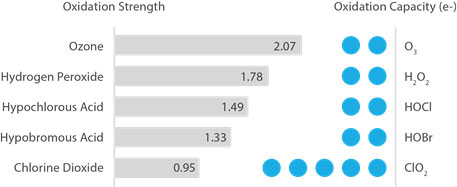
- Chlorine Dioxide has a higher oxidation capacity, and a lower oxidation strength than most species of chlorine, making it at least 2.6 times more powerful per ppm according to WHO CT values. / Chlorine Dioxide có công suất oxy hóa cao hơn và cường độ oxy hóa thấp hơn so với hầu hết các dạng clo khác, khiến nó mạnh gấp ít nhất 2,6 lần (tính theo giá trị CT của WHO) trên mỗi ppm.
- No carcinogenic by-products & no bad taste occurrences in water / Không tạo sản phẩm phụ gây ung thư & không gây mùi vị khó chịu trong nước
- Chlorine Dioxide acts only by oxidation and does not combine with organic compounds to form environmentally hazardous by-products such as Trihalomethane and other chlorinated organic compounds that have been listed as potentially carcinogenic. / Chlorine Dioxide chỉ hoạt động thông qua quá trình oxy hóa, không kết hợp với các hợp chất hữu cơ, do đó không tạo ra các sản phẩm phụ độc hại như Trihalomethanes (THMs) và các hợp chất hữu cơ chứa clo khác – vốn được liệt kê là có khả năng gây ung thư.
2.2. Less corrosive / Ít gây ăn mòn hơn
Chlorine Dioxide has a lower oxidation potential and does not hydrolyse to form an acid, and therefore is less corrosive. / Chlorine Dioxide có thế oxy hóa thấp hơn và không bị thủy phân tạo thành axit, vì vậy ít gây ăn mòn cho thiết bị và đường ống hơn so với chlorine.

2.3. Works over a wide pH / Hiệu quả trong dải pH rộng
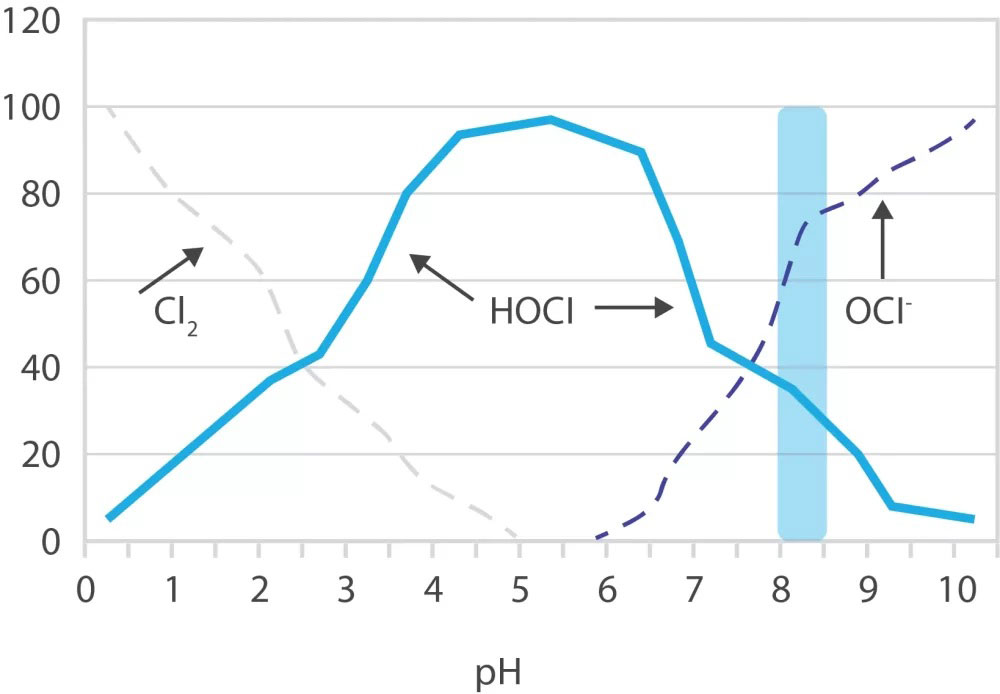
The effectiveness of chlorine is very pH dependent, and is almost ineffective above pH8. Chlorine Dioxide is effective at all pH’s below 12. / Hiệu quả của chlorine phụ thuộc mạnh vào độ pH, và gần như không hiệu quả ở pH > 8. Ngược lại, Chlorine Dioxide vẫn hiệu quả ở mọi mức pH dưới 12, giúp ứng dụng linh hoạt trong nhiều điều kiện nước khác nhau.
Overall, ClO2 offers a safer and more effective solution for water treatment needs and is an excellent choice for those who prioritise safety and efficiency. / Kết luận, ClO₂ mang đến giải pháp an toàn hơn, hiệu quả hơn cho nhu cầu xử lý nước, và là lựa chọn lý tưởng cho các đơn vị ưu tiên chất lượng, độ an toàn và hiệu quả vận hành lâu dài.

3. Why use chlorine dioxide in water disinfection systems? / Tại sao nên sử dụng chlorine dioxide trong hệ thống khử trùng nước?
Chlorine dioxide (ClO₂) has some unique properties which are particularly useful in the disinfection of water systems, setting it apart from other water disinfection methods. / Chlorine dioxide (ClO₂) có những đặc tính độc đáo đặc biệt hữu ích trong việc khử trùng hệ thống nước, giúp nó khác biệt so với các phương pháp khử trùng khác:
- With minimised side reactions and lower dependency on pH levels / Ít phản ứng phụ và ít phụ thuộc vào độ pH hơn so với chlorine thông thường.
- ClO₂ is also 10 times more soluble in water than chlorine and does not hydrolyse; making it much more efficient. / Khả năng hòa tan trong nước cao gấp 10 lần chlorine và không bị thủy phân, giúp tăng hiệu quả xử lý đáng kể.
Gaffey water disinfection system technologies provide in-situ chemical generation using binary reagents, thus avoiding hazardous and costly transportation to site – boosting cost-efficiency. / Công nghệ hệ thống khử trùng nước của Gaffey cho phép tạo hóa chất trực tiếp tại chỗ (in-situ chemical generation) bằng hai thành phần phản ứng (binary reagents), qua đó tránh việc vận chuyển hóa chất nguy hiểm và tốn kém đến công trình, giúp tăng hiệu quả chi phí và an toàn vận hành.
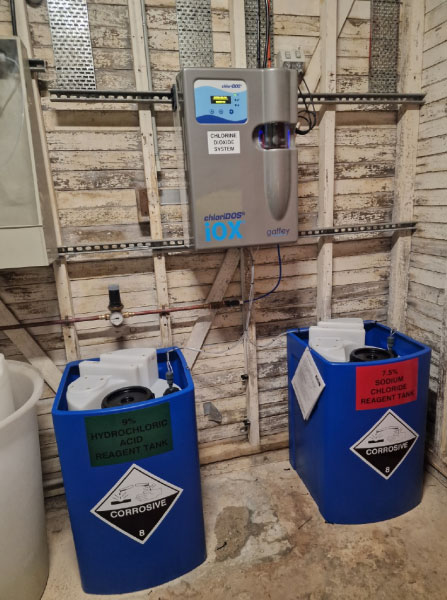
When produced by on-site generation, using binary reagents, Chlorine Dioxide can be very safely and economically generated by iOX in low concentration solutions ready for use. Reducing chemical handling and the environmental impact of water treatment. / Khi được tạo ra ngay tại chỗ bằng hai dung dịch phản ứng (binary reagents), Chlorine Dioxide có thể được tạo ra một cách an toàn và kinh tế bởi hệ thống iOX, ở nồng độ thấp và sẵn sàng sử dụng. Điều này giúp giảm thiểu việc tiếp xúc hóa chất và tác động môi trường trong quá trình xử lý nước.
Although Chlorine is a powerful disinfectant it is a very reactive oxidiser. Meaning that much of its oxidation capacity can be used up in unwanted side reactions with a wide range of chemicals and organic substances, which may be present in water. The performance of Chlorine is also heavily dependent upon pH, which must be monitored and controlled to ensure Chlorine remains effective. / Mặc dù Chlorine là một chất khử trùng mạnh, nhưng nó cũng là một chất oxy hóa rất phản ứng, khiến phần lớn khả năng oxy hóa của nó bị tiêu hao trong các phản ứng phụ không mong muốn với nhiều loại hóa chất và hợp chất hữu cơ có trong nước. Hiệu quả của Chlorine cũng phụ thuộc nhiều vào độ pH, do đó cần phải theo dõi và kiểm soát liên tục để đảm bảo chlorine duy trì hiệu quả khử trùng.

Chlorine Dioxide is far less reactive than Chlorine and many other oxidisers, making it very effective over a very wide pH range. Therefore it has a much higher disinfection capacity to destroy the intended target; bacteria and biological contamination. / Clo dioxide (ClO₂) ít phản ứng hơn nhiều so với clo và nhiều chất oxy hóa khác, giúp nó hiệu quả trong một dải pH rất rộng. Do đó, ClO₂ có khả năng khử trùng cao hơn đáng kể trong việc tiêu diệt các mục tiêu chính như vi khuẩn và các tác nhân gây ô nhiễm sinh học.
Due to its lower reactivity, Chlorine Dioxide is an excellent choice for applications where the formation of toxic THMs, Chloramines, or odour/taste problems must be avoided. / Nhờ độ phản ứng thấp hơn, ClO₂ là lựa chọn lý tưởng cho các ứng dụng cần tránh hình thành các hợp chất độc hại như THMs, chloramine, cũng như các vấn đề về mùi và vị trong nước.
The available power of a given chemical to act as an oxidizer (electron receiver) or as a reducer (electron donor) is commonly called the oxidation-reduction potential (ORP). This property is measured in volts (V). As shown in the ORP table, ClO2 has 0.95V of oxidation potential, which is a mild oxidizer compared to many other common disinfectants used in water treatment application / Khả năng của một hóa chất trong việc hoạt động như chất oxy hóa (nhận electron) hoặc chất khử (cho electron) thường được gọi là thế oxy hóa - khử (ORP) và được đo bằng vôn (V). Như thể hiện trong bảng ORP, ClO₂ có thế oxy hóa là 0,95V, là một chất oxy hóa nhẹ so với nhiều loại chất khử trùng phổ biến khác được sử dụng trong ứng dụng xử lý nước.
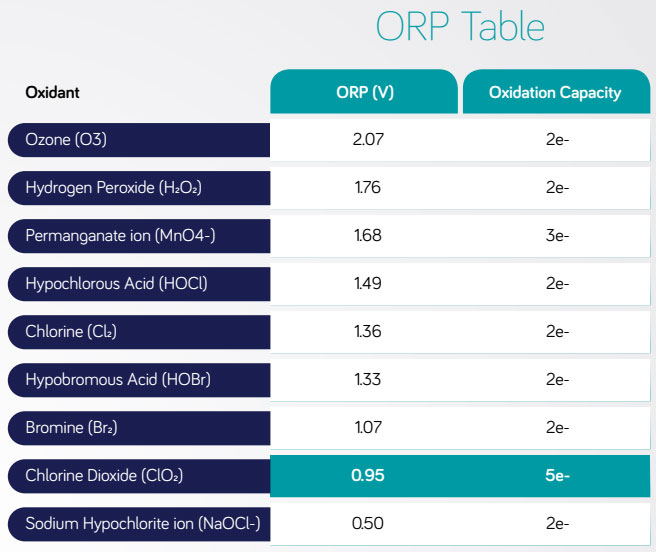
A single ClO2 molecule can accommodate up to five electrons (e-), which gives it 2.6 times the oxidative capacity of Chlorine. This makes Chlorine Dioxide a very efficient disinfectant. / Một phân tử ClO₂ đơn lẻ có thể tiếp nhận tới năm electron (e⁻), điều này mang lại cho nó khả năng oxy hóa cao hơn 2,6 lần so với clo. Nhờ đó, clo dioxide là một chất khử trùng cực kỳ hiệu quả.
Due to its unique properties, Chlorine Dioxide can rapidly penetrate and destroy Biofilm, Algae and Cryptosporidium/Giardia cysts, making it the disinfectant of choice for Legionella control applications and Cryptosporidium decontamination treatments. / Với các đặc tính độc đáo, clo dioxide có thể xâm nhập nhanh chóng và phá hủy màng sinh học (biofilm), tảo, cũng như các bào nang của Cryptosporidium và Giardia, khiến nó trở thành lựa chọn hàng đầu cho các ứng dụng kiểm soát Legionella và xử lý khử nhiễm Cryptosporidium.

4. How Does Chlorine Dioxide Kill Bacteria / Clo Dioxide tiêu diệt vi khuẩn như thế nào?
The oxidising properties and the radical nature of Chlorine Dioxide make it an excellent virucidal and bactericidal agent in a large pH range. / Tính chất oxy hóa và đặc tính gốc tự do của Chlorine Dioxide khiến nó trở thành một chất diệt virus và vi khuẩn cực kỳ hiệu quả trong một dải pH rộng.
In alkaline media the permeability of living cell walls to gaseous chlorine dioxide radicals seems to be increased allowing an easier access to vital molecules. / Trong môi trường kiềm, tính thấm của màng tế bào sống đối với các gốc tự do khí Chlorine Dioxide tăng lên, cho phép chất này dễ dàng xâm nhập vào các phân tử quan trọng bên trong tế bào.
The reaction of chlorine dioxide with vital amino acids is one of the dominant processes of its action on bacteria and viruses. / Phản ứng giữa Chlorine Dioxide với các axit amin thiết yếu là một trong những cơ chế chính giúp nó tiêu diệt vi khuẩn và virus.
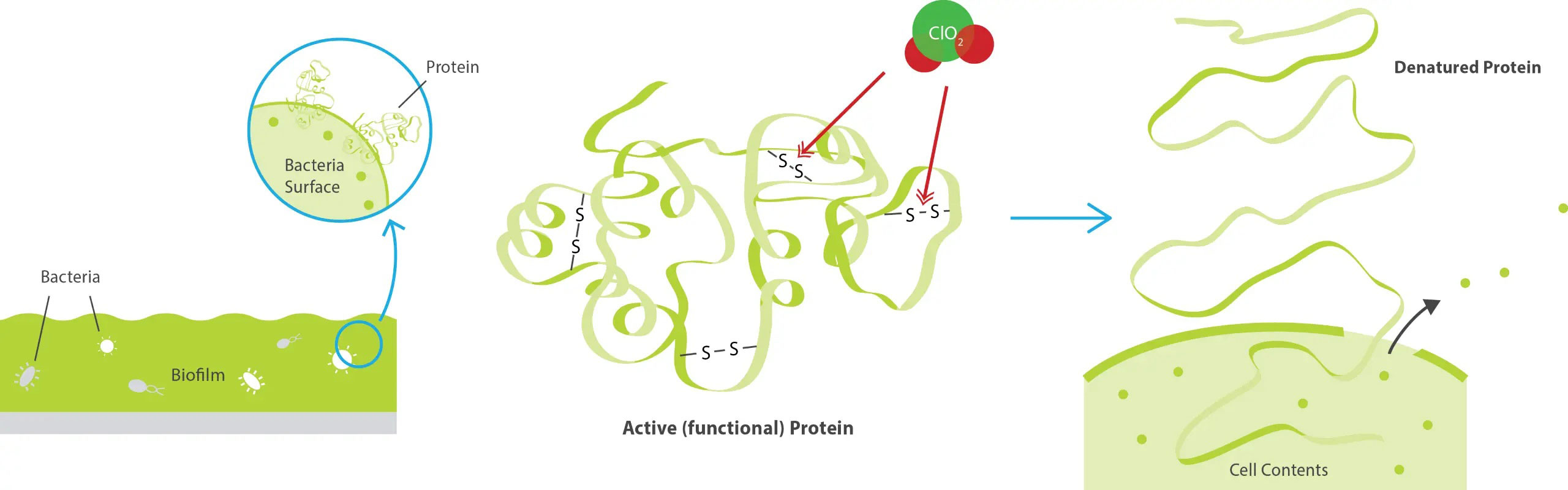
Compounds within the cells and on the surface of cell membranes that contain oxidisable material react with chlorine dioxide, causing cell metabolism to be disrupted. Chlorine dioxide also reacts directly with disulphide bonds in the amino acids and the RNA in the cell. / Các hợp chất bên trong tế bào và trên bề mặt màng tế bào có chứa vật chất dễ bị oxy hóa sẽ phản ứng với Chlorine Dioxide, dẫn đến sự gián đoạn quá trình trao đổi chất của tế bào. Chlorine Dioxide cũng phản ứng trực tiếp với các liên kết disulfide trong axit amin và RNA của tế bào, gây ra sự phá hủy cấu trúc sinh học của vi sinh vật.
Unlike non-oxidizing disinfectants, chlorine dioxide kills microorganisms even when they are inactive. The oxidative load placed on the cells by the action of chlorine dioxide mean that most microorganisms are unable to build up resistance to chlorine dioxide. / Khác với các chất khử trùng không có tính oxy hóa, Chlorine Dioxide có khả năng tiêu diệt vi sinh vật ngay cả khi chúng đang ở trạng thái không hoạt động. Do tác động oxy hóa mạnh mẽ mà Chlorine Dioxide gây ra, phần lớn vi sinh vật không thể phát triển khả năng kháng lại loại chất khử trùng này.
The oxidising properties and the radical nature of Chlorine Dioxide make it an excellent virucidal and bactericidal agent in a large pH range. / Tính chất oxy hóa và đặc tính gốc tự do của Chlorine Dioxide khiến nó trở thành một chất diệt virus và vi khuẩn tuyệt vời trong một dải pH rộng.
In alkaline media the permeability of living cell walls to gaseous chlorine dioxide radicals seems to be increased allowing an easier access to vital molecules. / Trong môi trường kiềm, tính thấm của màng tế bào sống đối với các gốc tự do Chlorine Dioxide ở thể khí tăng lên, giúp chúng dễ dàng tiếp cận hơn với các phân tử quan trọng trong tế bào.
The reaction of chlorine dioxide with vital amino acids is one of the dominant processes of its action on bacteria and viruses. / Phản ứng giữa Chlorine Dioxide và các axit amin thiết yếu là một trong những cơ chế chính cho hoạt động diệt khuẩn và diệt virus của nó.
Compounds within the cells and on the surface of cell membranes that contain oxidisable material react with chlorine dioxide, causing cell metabolism to be disrupted. Chlorine dioxide also reacts directly with disulphide bonds in the amino acids and the RNA in the cell. / Các hợp chất bên trong tế bào và trên bề mặt màng tế bào có chứa chất dễ bị oxy hóa sẽ phản ứng với Chlorine Dioxide, dẫn đến sự rối loạn trong quá trình trao đổi chất của tế bào. Ngoài ra, Chlorine Dioxide còn phản ứng trực tiếp với các liên kết disulfide trong axit amin và RNA của tế bào, gây tổn thương và tiêu diệt vi sinh vật.
Unlike non-oxidizing disinfectants, chlorine dioxide kills microorganisms even when they are inactive. The oxidative load placed on the cells by the action of chlorine dioxide mean that most microorganisms are unable to build up resistance to chlorine dioxide. / Khác với các chất khử trùng không có tính oxy hóa, Chlorine Dioxide có khả năng tiêu diệt vi sinh vật ngay cả khi chúng đang ở trạng thái không hoạt động. Do tác động oxy hóa mạnh mẽ mà nó tạo ra lên tế bào, đa số vi sinh vật không thể phát triển khả năng kháng lại Chlorine Dioxide.
In practical terms however, few bacteria live alone, and they are most often found in water and on surfaces in the form of a “biofilm” which is a close association of many millions of bacteria. / Tuy nhiên, trên thực tế, rất ít vi khuẩn sống đơn lẻ — chúng thường tồn tại trong môi trường nước hoặc trên bề mặt dưới dạng “màng sinh học” (biofilm), là cấu trúc gồm hàng triệu vi khuẩn liên kết chặt chẽ với nhau.
Many biocides have particular problems in penetrating this biofilm, due to the polysaccharide “glue” that is secreted by bacteria such as Pseudomonas to hold the biofilm together. Unlike most biocides, chlorine dioxide can effectively penetrate the polysaccharide layer of biofilm without being used up in reacting with the inert sugars. This allows the ClO2 to act on the bacteria themselves, destroying the biofilm. / Nhiều chất diệt khuẩn thông thường gặp khó khăn trong việc thâm nhập màng sinh học này, do lớp “keo” polysaccharide do các vi khuẩn như Pseudomonas tiết ra để giữ kết cấu biofilm. Khác với đa số các chất diệt khuẩn khác, Chlorine Dioxide có thể thâm nhập hiệu quả qua lớp polysaccharide này mà không bị tiêu hao khi phản ứng với các loại đường trơ, nhờ đó ClO₂ có thể tác động trực tiếp lên vi khuẩn và phá hủy toàn bộ biofilm.
Chlorine dioxide is one of a number of disinfectants that are effective against Giardia Lambia and Cryptosporidium oocysts, which cause diseases such as cryptosporidiosis in public drinking water supplies. A number of public water works are now utilising chlorine dioxide generation systems alongside in order to provide complete protection from Cryptosporidium. / Chlorine Dioxide cũng là một trong số ít các chất khử trùng hiệu quả đối với nang bào Giardia Lamblia và Cryptosporidium, là những tác nhân gây ra các bệnh như cryptosporidiosis trong nguồn nước uống công cộng. Hiện nay, nhiều nhà máy nước công cộng đã triển khai các hệ thống tạo Chlorine Dioxide để tăng cường bảo vệ nguồn nước khỏi Cryptosporidium, đảm bảo an toàn sức khỏe cộng đồng.

Chloridos® iOX® Systems / Hệ thống Chloridos® iOX®
Our Chloridos® iOX® systems all benefit from the same great features: / Tất cả các hệ thống Chloridos® iOX® đều có những ưu điểm nổi bật sau:
- Plug-and-play technology / Công nghệ “plug-and-play” dễ dàng lắp đặt và vận hành
- Unique vacuum dosing technology / Công nghệ định lượng chân không độc quyền
- ART Adaptive Response Technology built in / Tích hợp ART – Adaptive Response Technology thông minh
- User friendly touch screen / Màn hình cảm ứng thân thiện với người dùng
- Remote mimic monitoring and reporting / Giám sát và báo cáo từ xa qua nền tảng trực tuyến
- Meticulous construction detail / Thiết kế chi tiết, tỉ mỉ đến từng cấu kiện
- BPR compliance / Tuân thủ tiêu chuẩn BPR (Biocidal Products Regulation)
- Significant COSHH benefits / Đảm bảo an toàn hóa chất vượt trội (COSHH compliant)
- Manufactured in Great Britain / Sản xuất 100% tại Vương quốc Anh
Quý khách hàng có nhu cầu tư vấn về thiết bị và tư vấn công nghệ miễn phí vui lòng liên hệ: 0972.799.995